26 August 2026
Wedding Invitation Wording Examples for Every Style
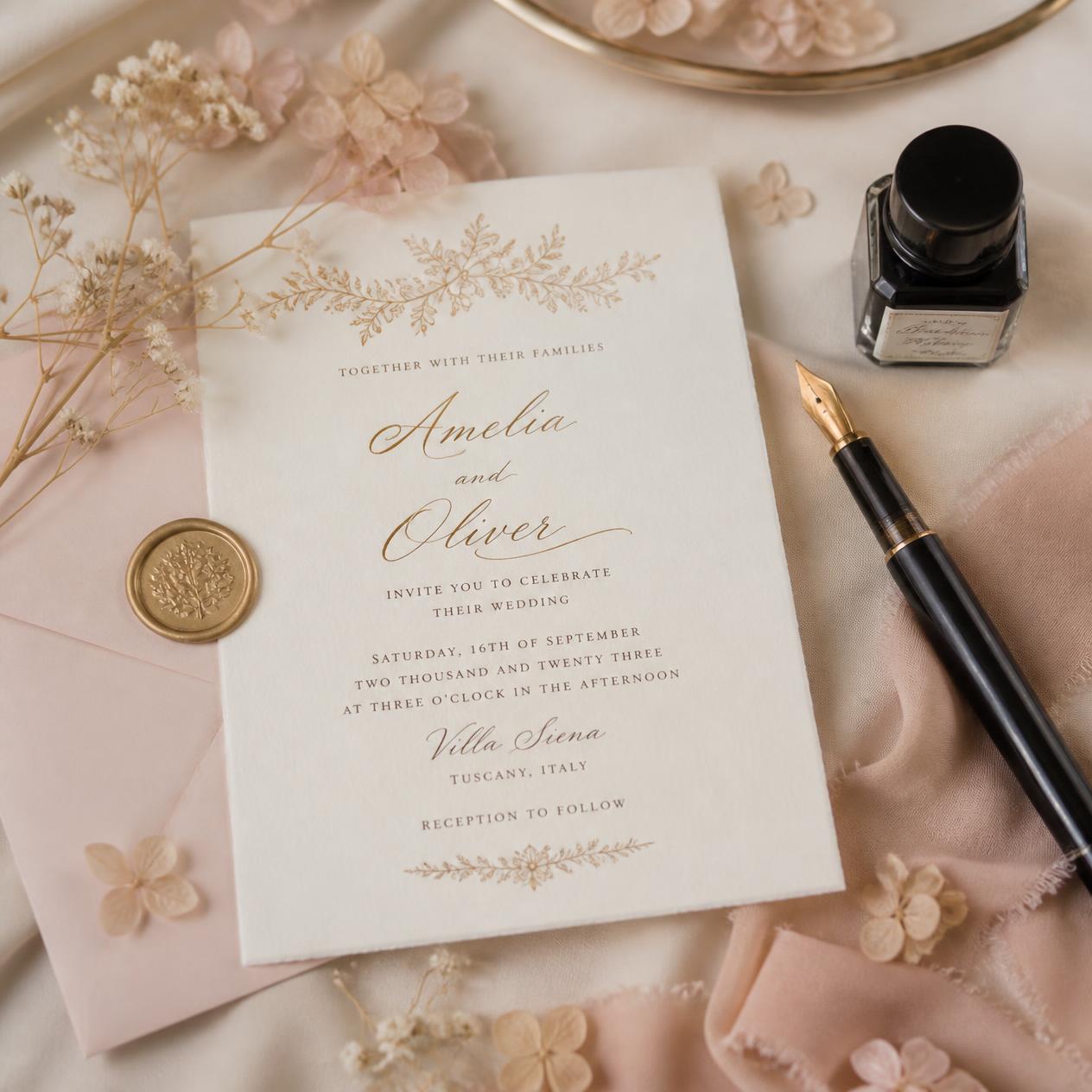
Staring at a blank invitation template is one of the most surprisingly stressful parts of wedding planning. You know the basics — who, what, when, where — but turning that into wording that actually sounds like you, and not a stiff, generic template, is harder than it looks.
Here's the good news: there's no single "correct" way to word a wedding invitation. Filipino weddings in particular blend formal tradition with personal touches, so your wording can be as classic or as casual as your celebration. Below are the essential elements every invitation needs, plus ready-to-use examples for different styles — formal, modern, parent-hosted, and couple-hosted — so you can find (or adapt) the version that fits.
The Essential Elements of Any Wedding Invitation
Before picking a tone, make sure your wording covers these basics:
Host line — who is inviting the guests (parents, both families, or the couple themselves)
Request line — the invitation itself ("request the honor of your presence," "invite you to celebrate," etc.)
Couple's names
Date and time
Venue — ceremony and reception, if different
Dress code (optional but increasingly common)
RSVP details — how and by when to respond
Miss one of these and you'll spend the weeks before the wedding fielding the same questions over and over. This is one place where digital invitations have a real edge: you can add an RSVP button or a "Details" section without redesigning anything, which we'll come back to below.
Formal / Traditional Wording
This is the classic template most Filipino Catholic weddings still lean on, especially when parents are hosting.
Mr. and Mrs. [Bride's Parents] together with Mr. and Mrs. [Groom's Parents] request the honor of your presence at the marriage of their children
[Bride's Name] and [Groom's Name]
Saturday, the fourteenth of March two thousand twenty-six at half past two in the afternoon [Church Name], [City]
Reception to follow at [Venue Name]
Modern / Casual Wording
For couples who want something warmer and less formal — common with garden weddings, destination weddings, and second marriages.
Together with joyful hearts, [Bride's Name] & [Groom's Name] invite you to share in their wedding day
[Date] · [Time] [Venue], [City]
Let's celebrate love, laughter, and happily ever after. Reception and dinner to follow.
When the Couple Is Hosting Themselves
If you're paying for and hosting your own wedding, the "request the honor" language written for parents doesn't quite fit. This version keeps things personal and direct:
[Bride's Name] and [Groom's Name] together with their families joyfully invite you to celebrate their wedding
[Date] at [Time] [Venue]
Your presence is the greatest gift of all.
Adding a Filipino Touch
Many couples weave in a Tagalog line or two to reflect their culture, often on the reception card or as a closing line beneath an otherwise English invitation:
"Sa piling ng mga mahal namin sa buhay, ipinagdiriwang namin ang aming kasal." (Surrounded by our loved ones, we celebrate our wedding.)
A line like this is a popular middle ground — formal enough for older relatives (lolo, lola, and the ninongs and ninangs), personal enough to feel like your wedding.
RSVP Wording That Actually Gets Responses
Vague RSVP language is one of the biggest reasons couples end up chasing down headcounts for weeks. Be specific about the deadline and the action you want guests to take:
Kindly RSVP by [date] to confirm your attendance. Tap the button below to let us know if you'll be joining us, and share any dietary preferences.
This is where digital invitations quietly solve a problem paper never could. Instead of hoping a reply card makes its way back in the mail, platforms like Invitezy let you build the RSVP link directly into the invitation wording, with every response updating your guest list automatically. Guests just tap once, and you're not stuck compiling reply cards by hand two weeks before the wedding.
Common Wording Mistakes to Avoid
Being vague about time. "Afternoon" means different things to different guests — give an exact time.
Forgetting the dress code, if you have one. Guests will ask, or worse, guess wrong.
Overcomplicating the host line. If your family situation is blended or non-traditional, it's fine to simplify to "together with their families."
Skipping a deadline on the RSVP. "Please RSVP" with no date rarely gets a timely response.
Mismatched formality. A very formal request line paired with a casual reception card can feel disjointed — pick one tone and carry it through.
Start With a Template, Then Make It Yours
You don't have to write your wording from scratch. Invitezy's template library comes with proven wording built into each design — formal, modern, and bilingual options included — so you can start from something polished and simply swap in your own names, date, and details. It's a faster way to land on wording that sounds like you, without staring at a blank page.
Ready to see your wording come to life? Build your invitation at invitezy.com.